


Most people have had two kinds of mechanic.
You tell the first one to go ahead with anything under a certain amount, and he does exactly that. Everything under the amount gets done, and you find out when you pick up the car. Everything over it waits for your call, even if the car is stuck on the lift and the answer is obvious.
The second one hears the same instruction and treats it as information about you. He fixes the small things without bothering you. But he also calls about a cheap repair when he remembers you said you were selling the car in the spring. And when a brake line fails on the lift, he does not leave you a voicemail and wait three days. He fixes it, because there is nothing to decide, and tells you what he found.
The first mechanic followed your number. The second one understood what it was for. You already know which one you go back to.
What the number is
Every home we manage has a repair approval amount. It is set for that property, with that owner, and written into the management agreement. Below it, we can act without calling you first. Above it, we come to you with the problem, the options and a price before work starts.

We do not publish a single figure, because there is no right one. The right amount for one house is the wrong amount for another, and the right amount for an owner who wants to hear about everything is the wrong amount for one who wants to hear about nothing.
That much is ordinary. Most managers have a number. What matters is how it is used.
Below the number, we may still call
A small repair is not always a small decision. If a part fails on an appliance you were planning to replace, the invoice may be well under your amount, and repairing it may still be the wrong thing to do. If we know your plans, we act on them. If we do not, we ask.
We ask most often early on, while we are still learning what you want from the property. A repair that makes perfect sense for an owner who will hold the house for twenty years can be wasted money for one who is selling next year. The amount in the agreement cannot tell us which of those you are. A conversation can.
Above the number, there is sometimes nothing to decide
Now take the other case. A water heater fails. It is leaking, and it cannot be repaired. It costs more than the approval amount.
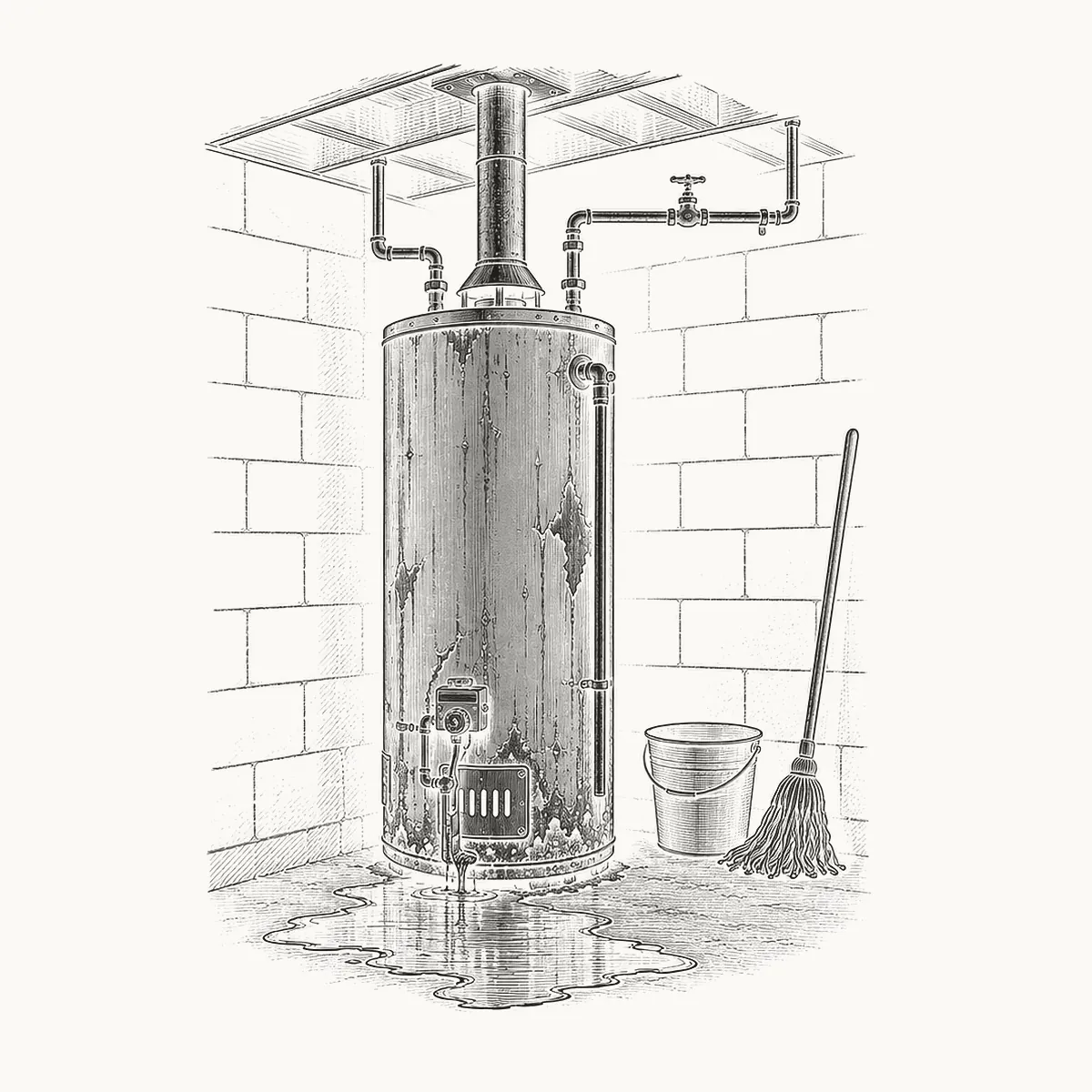
There is very little value in a meeting about that. The house needs hot water, the leak is doing damage, and no option on the table is better than replacing it. So we replace it, in the most cost-effective way we can, and we tell you what we did and why.
A manager who follows the number mechanically would stop and wait for you. The resident would have no hot water, the floor would keep getting wet, and you would end up approving exactly what we would have done anyway, three days later.
Why we do not just write a rule for everything
I know this makes some people uneasy. An edge that is left to judgment can feel like an edge that is left undefined, and a rule for every case sounds safer.
It is not safer. Rules followed mechanically are how you get the phone call during dinner about a part that costs less than the call was worth. They are how you get a repair to something you were about to throw away, done without a word because it was under the limit. They are how a leak runs for three days while everyone waits for permission to do the obvious thing.
Each of those follows the rule perfectly. None of them is what you wanted.
What you are actually hiring
You are not hiring us to follow a number. You are hiring people who know this work to act as an extension of you: with your goals for the property in mind, and with the technical knowledge and experience that come from doing it every day.
The number tells us how much you want to be involved. Your goals tell us what to do. Our craft is knowing the difference between a repair that deserves your attention and one that only needs to be done right.
That gets better with time. The more we understand what you want from the property, the less often we need to interrupt you, and the more useful the call is when we do. It is a relationship, and it is supposed to feel like one. If working with us ever feels like dealing with a machine that can only read a threshold, we have failed at the part of the job I care about most.
None of this is at odds with doing things the same way every time. The approval amount is part of our standard practice, and so is the judgment around it. Your goals set the destination. We still fly the plane.
— Miles